|
|
|
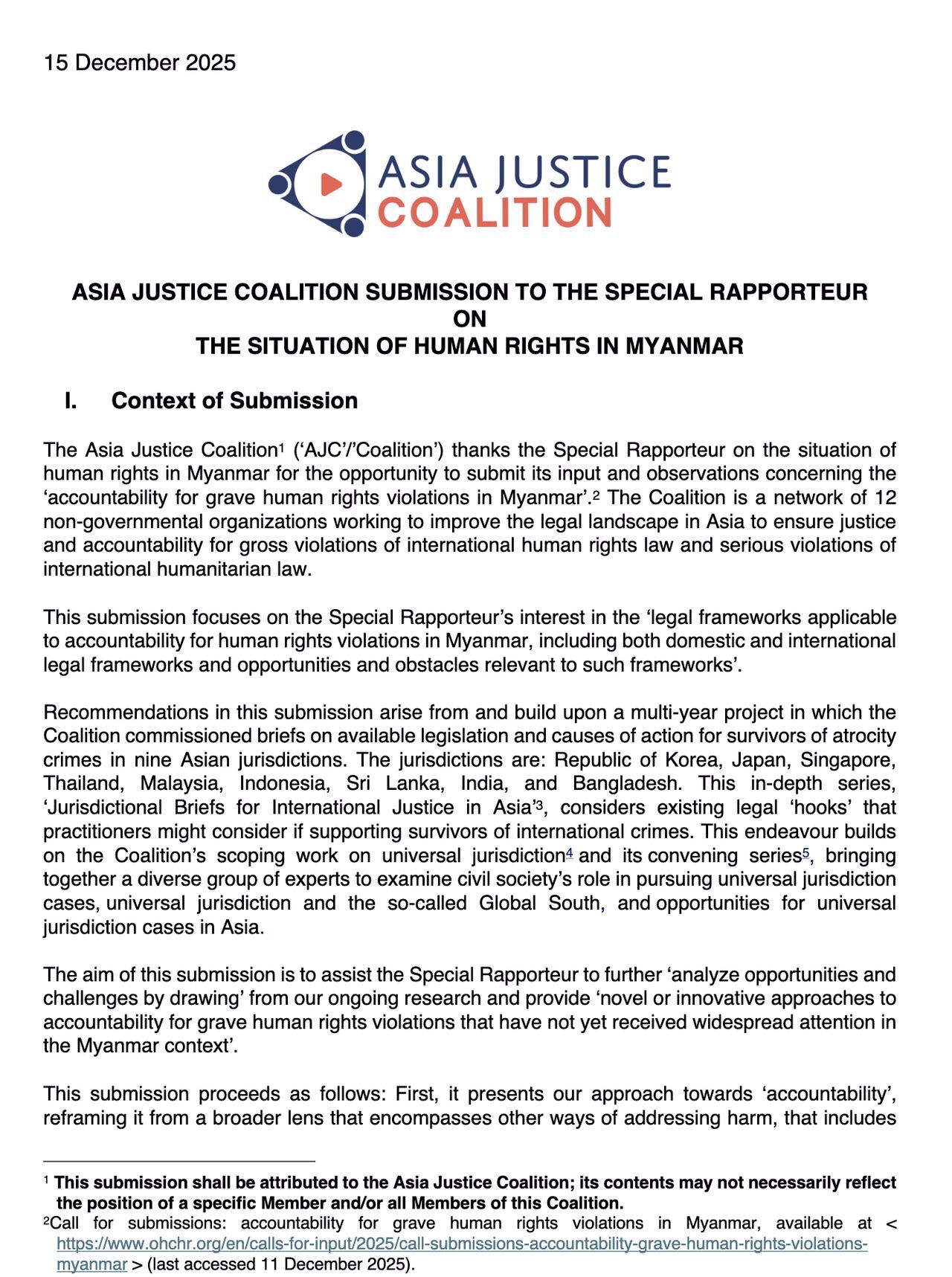
AJC SUBMISSION TO THE UN SPECIAL RAPPORTEUR ON MYANMAR
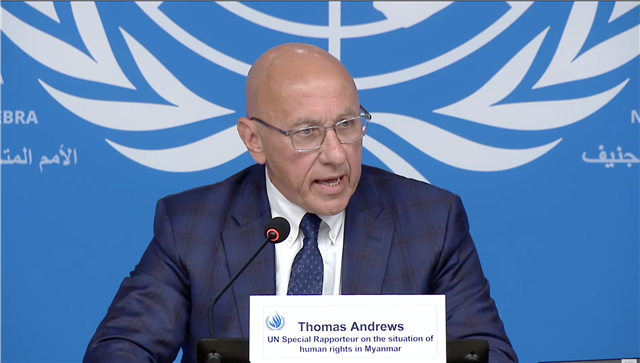
On 15 December, the Asia Justice Coalition responded to a call for input by the UN Special Rapporteur on the situation of human rights in Myanmar, Tom Andrews, which will inform his conference room paper that considers pathways to accountability for grave human rights violations in Myanmar. In the written submission, the Coalition presented our approach towards accountability’, reframing it from a broader lens that encompasses other ways of addressing harm that includes but is not limited to international criminal justice. Building on our research and engagement, the submission addresses the possibility of expanding ‘accountability’ for: (i) the actual grave human rights violations; (ii) funding, enabling, or benefiting from such grave human rights violations; and (iii) failing to address the crime or perpetuation of the harm. Finally, we examine obstacles and opportunities for exploring such legal avenues.
|
|
|
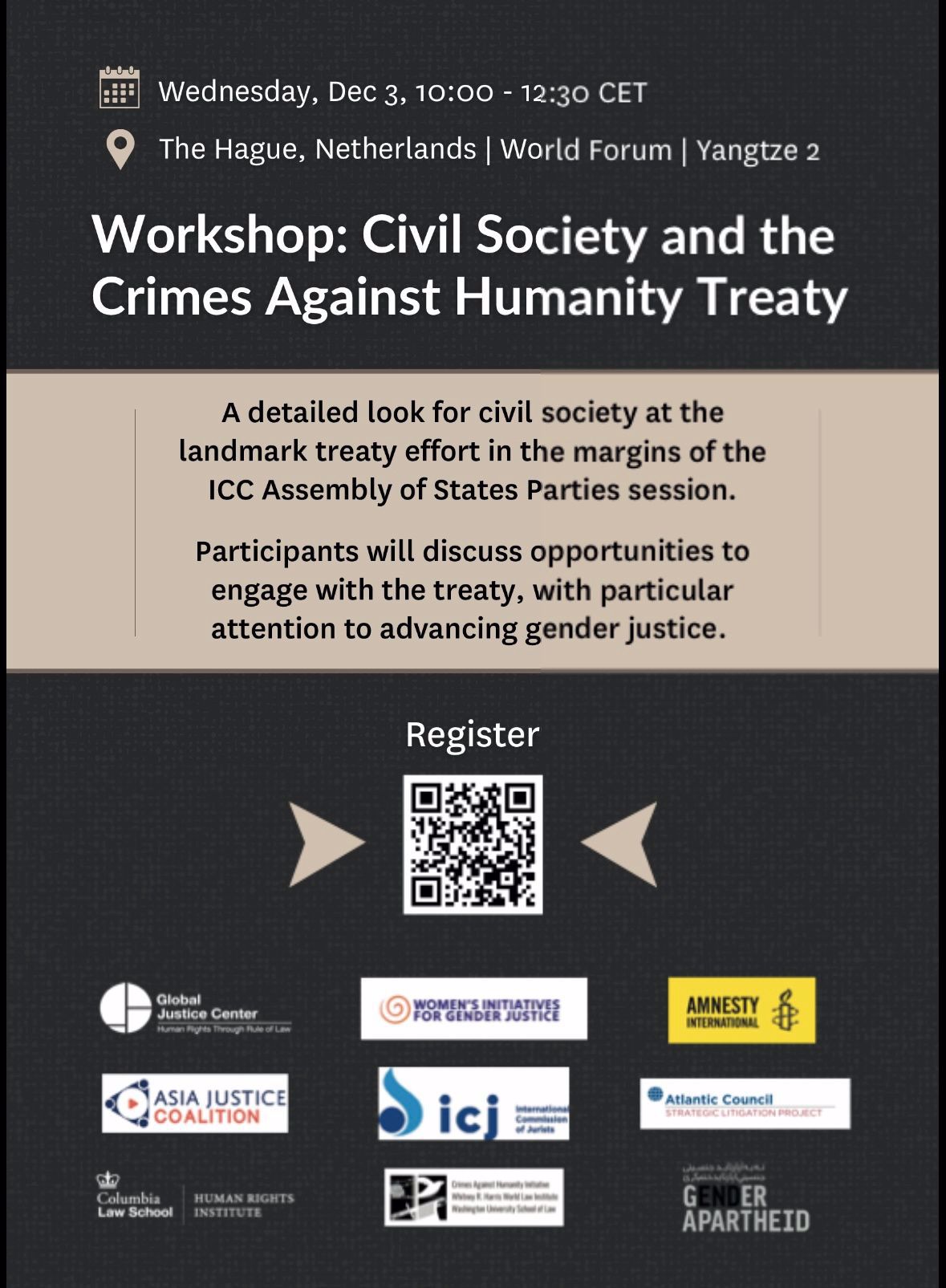
CIVIL SOCIETY WORKSHOP ON CAH AT THE ICC ASP
On 3 December, the Asia Justice Coalition, along with its members Global Justice Center, Amnesty International, International Commission of Jurists, and other CSOs, co-hosted a civil society workshop on Crimes Against Humanity at the 24th International Criminal Court Assembly of States Parties. The event witnessed participation from a diverse group of stakeholders over the process at the UN, substantive proposals concerning the ILC Draft Articles, and opportunities for advocacy, including proposals to advance civil society participation and gender justice.
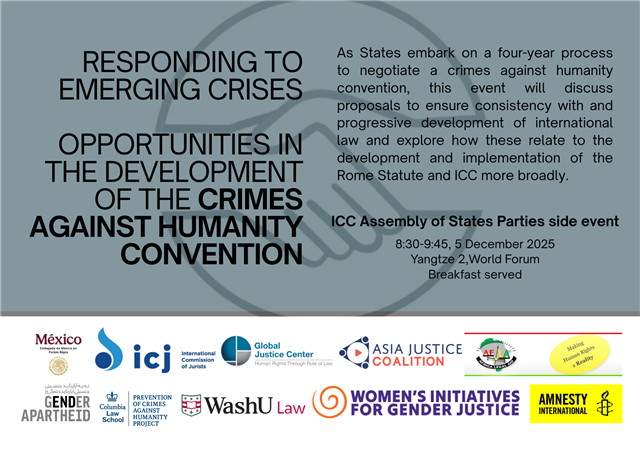
‘RESPONDING TO EMERGING CRISIS: OPPORTUNITIES IN THE DEVELOPMENT OF THE CRIMES AGAINST HUMANITY CONVENTION’
On 5 December, the Asia Justice Coalition, the International Commission of Jurists, Amnesty International, the Global Justice Center, and other CSOs co-sponsored a side event entitled ‘Responding to Emerging Crisis: Opportunities in the Development of the Crimes Against Humanity Convention’. The event discussed proposals to ensure consistency with and progressive development of international law and explored how these relate to the development and implementation of the Rome Statute more broadly.
|
|
|---|
|
HRW: ACTION NEEDED TO REINFORCE LANDMINE BAN
On 1 December, Human Rights Watch published its ‘Landmine Monitor 2025’
report assessing implementation of and adherence to the 1997 Mine Ban Treaty. According to HRW, “The Myanmar armed forces’ use of mines led to 2,029 recorded casualties from landmines or explosive remnants of war in 2024, the most of any country."
LAW: NEW REPORT ON THE LASTING IMPACT OF GENOCIDE ON ROHINGYA CHILDREN
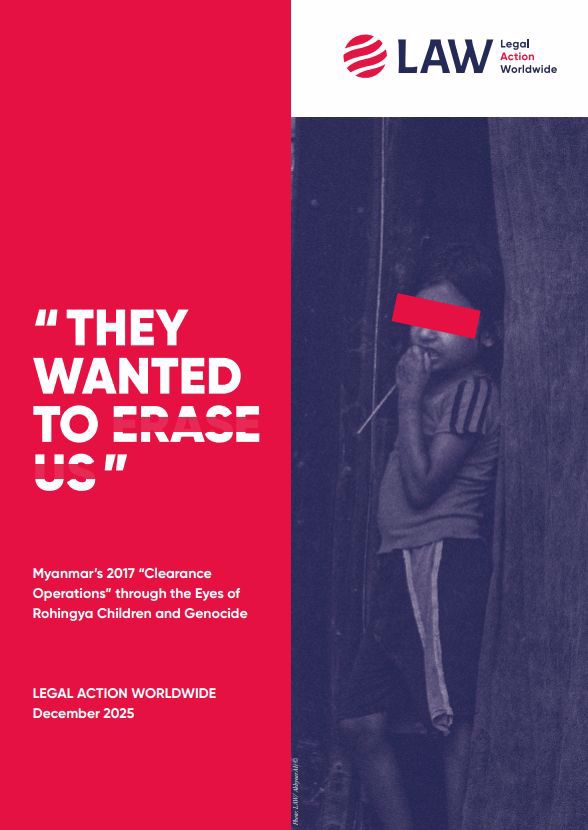
On 5 December, Legal Action Worldwide hosted a side event on 'Children and International Crimes: Rethinking Accountability Through the Eyes of the Youngest Victims in Palestine, Sudan, Myanmar, and Ukraine' at the International Criminal Court Assembly of States Parties. LAW also launched its new report, 'They Wanted to Erase Us”: Myanmar’s 2017 Clearance Operations through Eyes of Rohingya Children and Genocide’- revealing the genocide not only aimed to destroy the Rohingya people, but it also aimed to erase their future by targeting their children.
FORTIFY RIGHTS: ‘MYANMAR JUNTA USING NEW ELECTION LAW TO CRACK DOWN ON DISSENT AHEAD OF SHAM ELECTIONS’
On 9 December, Fortify Rights reported the Myanmar military junta is using its new “Election Protection Law” to silence and intimidate critics ahead of its sham elections. According to Fortify, “The junta is using its new bogus law as a weapon to silence anyone advocating for freedom and democracy. The Myanmar military is increasingly wielding its newly imposed election decree as a tool of repression, charging media houses and arresting journalists, activists, and ordinary citizens who criticize or refuse to legitimize the junta. These so-called elections are nothing more than an authoritarian performance and will deepen Myanmar’s problems.”
GJC: CAH CONVENTION AND GENDER JUSTICE LEGAL BRIEF SUMMARIES
In December, the Global Justice Center published summarised versions of the crimes against humanity convention legal briefs, including slave trade and centering victims and survivors. To read the full legal briefs, check here.
ICJ: ‘GENERAL ELECTIONS A SHAM TO LEGITIMIZE MILITARY RULE AND NOT RESTORE DEMOCRACY’
On 11 December, the International Commission of Jurists published reflections from a webinar it hosted on 'Election-related Domestic Laws in Myanmar and International and Regional Responses'. According to the ICJ, “genuine elections cannot take place amid armed conflict, mass displacement, pervasive repression, and laws designed to exclude opposition parties and silence critics.”
|
|
|
GCR2P SUBMISSION TO UN SPECIAL RAPPORTEUR ON MYANMAR
On 12 December, in response to a call for input by the Office of the Special Rapporteur on the Situation of Human Rights in Myanmar, the Global Centre for the Responsibility to Protect submitted analysis on avenues for accountability through the lens of mass atrocity risks, atrocity prevention, and the international norm of the Responsibility to Protect (R2P).
FORTIFY RIGHTS: ‘COURT RULING IN AUNG KO KO CASE POINTS TO MILITARY INVOLVEMENT’
On 18 December, Fortify welcomed the Thai appeal court’s ruling in the death of Myanmar national Aung Ko Ko effectively acquitting Sirachuch, also a Myanmar national, finding that he did not act in concert with the Thai military. Aung Ko Ko was fatally tortured on the Thai-Myanmar border in January 2024. In reaching its decision, the court signaled the involvement of members of the Thai military in the crime, raising serious concerns about accountability and the integrity of the investigation to date. According to Fortify, “The court made clear that Sirachuch did not act with the military, which makes it imperative to determine who from the military was involved. If ordinary investigative channels will not pursue those responsible, Thailand’s Convention Against Torture Committee or the Department of Special Investigations must step in to ensure this case is properly investigated and that no one is shielded from accountability because of their uniform or position.”
AI: ‘REPRESSIVE TACTICS INTENSIFY BEFORE JUNTA-IMPOSED ELECTIONS’
On 22 December, ahead of the December elections in Myanmar, Amnesty International called on the international community to focus on the human rights abuses…and to prioritize accountability in Myanmar. According to Amnesty, “This junta-organized election contrasts starkly with Myanmar’s nationwide democratic elections in 2015 and 2020. Whereas 2015 was a period of hope, promising peace and respect for human rights, the current era is one of hopelessness, where war crimes, arrests, and surveillance are a feature of daily life. Many in Myanmar are opposed to this election because they fear it will leave the same people who have been unlawfully killing Myanmar civilians for five years in a position of entrenched power, outside the bounds of accountability and justice that they must face.”
LAW SUBMISSION TO UN SPECIAL RAPPORTEUR ON MYANMAR
On 15 December, Legal Action Worldwide responded to a call for input by the UN Special Rapporteur Tom Andrews. The submission reflects LAW’s investigative and litigation experience with Rohingya survivors of the 2016-2017 clearance operations, as well as with victims and survivors of post-coup atrocities, with particular attention to sexual and gender-based crimes, crimes against and impacting children, and survivor participation in accountability processes.
GCR2P MYANMAR ATROCITY ALERT
On 17 December, Asia Justice Coalition member Global Centre for the Responsibility to Protect released its Atrocity Alert, sharing concerns and risks ahead of the scheduled December general elections in Myanmar. According to GCR2P, “Having adopted only one resolution on the current situation in Myanmar to date, the [Security] Council must play a more strategic role in addressing the crisis. The Council has allowed geopolitical tensions and China’s engagement with the junta to dilute its response. It is imperative that the UNSC hold the meeting on Myanmar in a public, open format, with the participation of civil society organizations working tirelessly to secure justice, accountability, and an end to the atrocities.”
|
|
|---|
|
|
|
|
‘TÜRK WARNS AGAINST VIOLENCE AND INTIMIDATION AHEAD OF MILITARY-CONTROLLED VOTE’
On 23 December, UN Human Rights Chief Volker Türk called on the military authorities in Myanmar to top using brutal violence to compel people to vote and stop arresting people for expressing any dissenting views. According to Turk, “These elections are clearly taking place in an environment of violence and repression. There are no conditions for the exercise of the rights of freedom of expression, association or peaceful assembly that allow for the free and meaningful participation of the people.”
ICC LAUNCHES FIRST ONE-COURT STRATEGIC PLAN 2026–2029
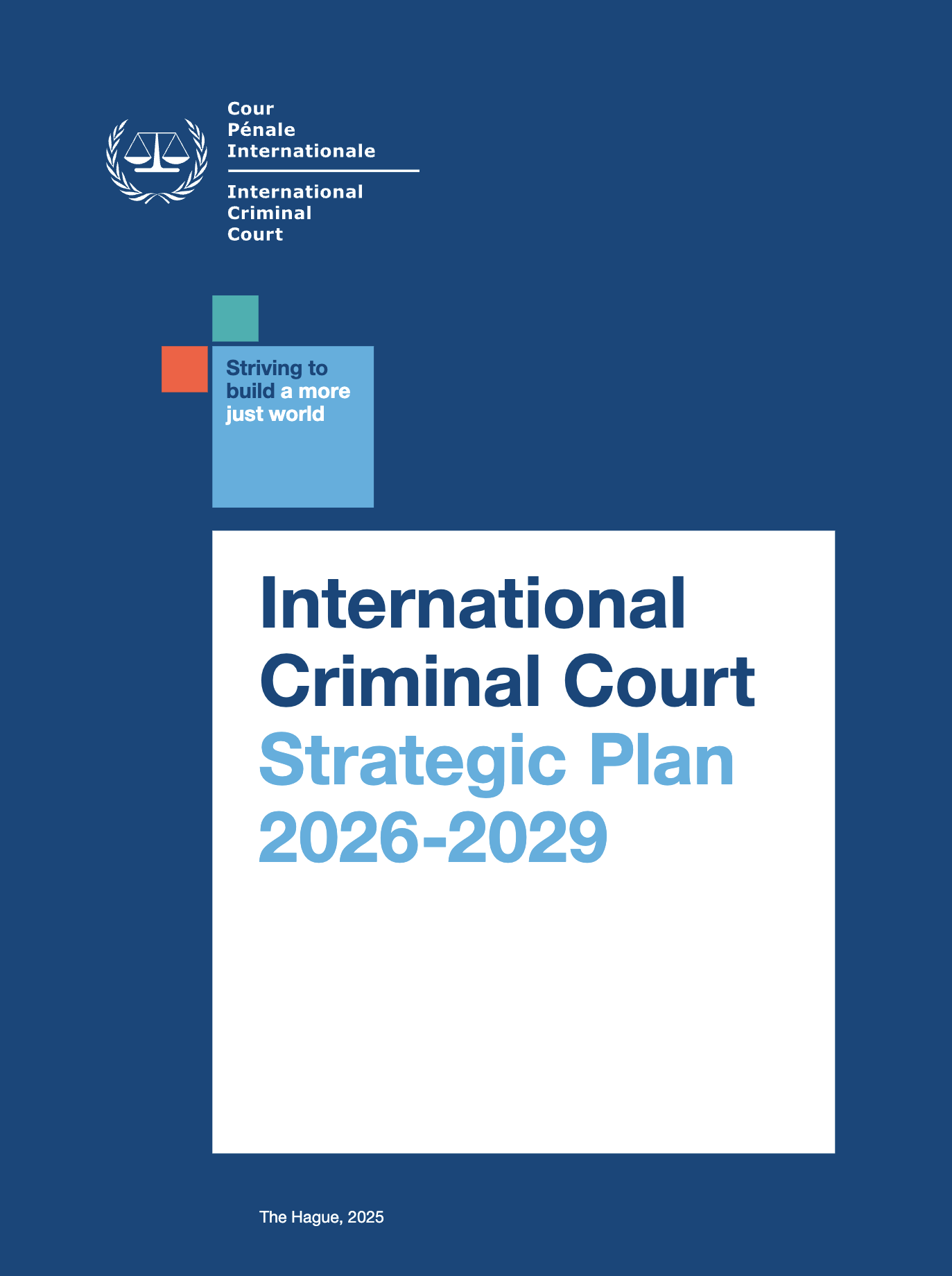
On 9 December, the International Criminal Court launched its Strategic Plan for 2026–2029. For the first time since its establishment, all organs of the Court, the Judiciary, the Office of the Prosecutor, and the Registry, together with the Trust Fund for Victims, have jointly developed and endorsed a single, integrated Strategic Plan.
|
|
|---|
|
|
|
|
|  |
|
|
|
|