|
|
|
AJC ATTENDS ANNUAL ICC-NGO ROUNDTABLES 2026
From 8 – 12 June, AJC and its members participated in the International Criminal Court – NGO Roundtables. The Roundtables provided an opportunity to engage with the Court’s principals and officials from various organs and sections on all matters related to the situations before the Court, including dedicated sessions on the situations in Bangladesh/Myanmar, Afghanistan, and the Philippines.
CALL TO RELOCATE ICC ASSEMBLY OF STATES PARTIES 2026 TO THE HAGUE
Ahead of the 25th Session of the ICC Assembly of State Parties (ASP), AJC joined the Coalition for the International Criminal Court to call upon the Presidency and Bureau of the ASP to either relocate the 25th Session of the Assembly, scheduled for December 2026, from New York to The Hague, or adopt a split-session model by holding the judicial elections in New York and the Assembly’s substantive deliberations in The Hague. The current environment in the United States, the unlawful use of sanctions against ICC officials and civil society organisations cooperating with the Court, the ongoing threats of institutional sanctions, and the extensive visa restrictions make full, meaningful, inclusive, effective, and safe civil society participation in New York impossible in practice.
|
|
|
AJC JURISDICTIONAL BRIEF ON INTERNATIONAL JUSTICE IN MALAYSIA
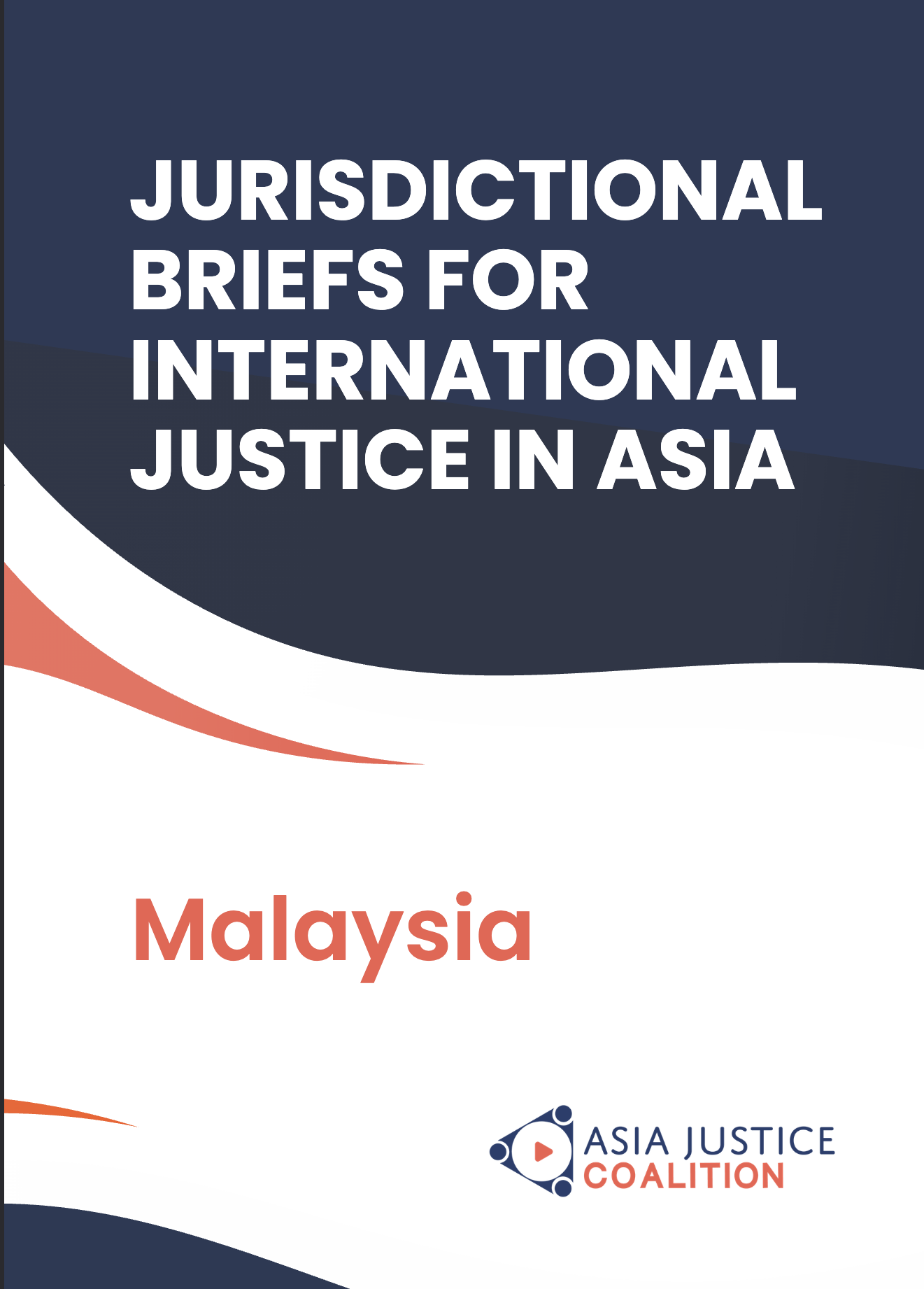
On 2 June, AJC published its Jurisdictional Brief on International Justice in Malaysia, the fourth of nine Jurisdictional Briefs on International Justice in Asia. This brief canvasses Malaysian criminal and civil law that could be useful to support survivors of atrocity crimes in Asia. It includes a summary of the Malaysian legal system and a review of relevant legislation and case law. The series considers existing domestic legal “hooks” that legal practitioners might consider if supporting survivors of international crimes. It builds on AJC's scoping work on universal jurisdiction and its universal jurisdiction convening series.
AJC PRIMER ON TERRORISM ALLEGATIONS AND HUMAN RIGHTS CHALLENGES
On 16 June, AJC published its primer on 'Terrorism Allegations and Human Rights Challenges', the seventeenth publication, in a series of primers focusing on international accountability. This primer offers a concise explanation of the following: 1) What is 'terrorism'?; 2) Are acts carried out in the context of national liberation and self-determination excluded?; 3) What are general human rights challenges arising out of terrorism and counter-terrorism measures?, and 4) What specific challenges arise regarding terrorism allegations and refugee protection?
|
|
|---|
|
BROUK: OPEN LETTER TO UN GENERAL ASSEMBLY TO ADOPT A NEW RESOLUTION REJECTING MYANMAR JUNTA’S SHAM ELECTION
On 3 July, the Burmese Rohingya Organisation UK joined 191 civil society organisations to issue an open letter to the UN General Assembly, urging member States to adopt a new resolution to reject the illegal junta’s sham election, enforce minimum engagement, advance accountability, and support Myanmar peoples’ efforts to build a genuine federal democratic Myanmar. According to the letter, “The credentials and representation of Myanmar at the United Nations must continue to reflect the will and democratic aspirations of the people of Myanmar and must not be used to confer legitimacy upon military rule. Any recognition of, or engagement that confers legitimacy upon, such structures risks normalizing ongoing violations of international law and undermining international accountability efforts”.
ICJ URGES STATES TO RELEASE ARBITRARILY DETAINED PERSONS IN MYANMAR
On 16 June, at the Interactive dialogue on the High Commissioner’s Annual Report of the 62nd regular session of the UN Human Rights Council, the International Commission of Jurists and the International Bar Association Human Rights Institute delivered an oral statement urging states to increase support for accountability efforts in Myanmar and demand the immediate release of all those arbitrarily detained. “Projecting legitimacy on an illegitimate regime must not serve to mask the reality that the junta continues to carry out atrocities, including against civilians across Myanmar. While the operation of the rule of law in Myanmar is absent, the military forces have increasingly weaponized the legal machinery to suppress free expression and shield perpetrators of atrocities from accountability”.
BHRN: ‘ARAKAN ARMY FORCING ROHINGYA TO BUILD SETTLEMENTS FOR RAKHINE ON THEIR OWN CONFISCATED LAND’
On 15 June, the Burma Human Rights Network called on the United League of Arakan (ULA) and its armed wing, the Arakan Army (AA) to immediately end the forced labour of Rohingya civilians in northern Maungdaw Township and halt the confiscation and redistribution of Rohingya-owned land to ethnic Rakhine settlers. Information gathered by BHRN's human rights researchers reveals that since the last week of May 2026, the ULA/AA has imposed forced labor demands on at least six Rohingya villages in northern Maungdaw, more than 300 people in total, to build infrastructure for new settlements it intends to establish for Rakhine communities at Sapay Kone and Maung Hna Ma, both former Rohingya villages.
FORTIFY: MALAYSIAN REFUGEE REGISTRATION SCHEME MUST PROTECT RIGHTS
On 1 June, Fortify Rights called upon the Malaysian government to ensure its new refugee registration scheme protects refugees and asylum seekers from arrest, detention, forced returns, and prevent government misuse of refugee data. On June 1, 2026, Malaysia implemented “phase one” of its new Refugee Registration Document framework, officially known as Dokumen Pendaftaran Pelarian (DPP) in Malay, for Rohingya and other detainees in immigration detention centers nationwide. The government’s proposed DPP system would go through two stages. First, the Refugee Status Assessment Committee would interview and review an individual’s case. The recommendations would then be referred to the Special Committee on Refugee Status Determination, which would make the final decision. Only people confirmed as refugees through this process would receive the DPP. The first phase will focus on refugee status determination for 4000 detained refugees, mainly Rohingya from Myanmar, who are currently held in immigration detention centers nationwide.
|
|
|
GCR2P: EXPERT VOICES ON ATROCITY PREVENTION EPISODE 56: CHALOKA BEYANI
On 26 June, the Global Centre for the Responsibility to Protect spoke with Chaloka Beyani, the Special Adviser of the UN Secretary-General on the Prevention of Genocide. During the episode, Special Adviser Beyani explores the role of the UN Office on Genocide Prevention and the Responsibility to Protect in early warning and the prevention of atrocities. Special Adviser Beyani also reflects on the Office’s engagement with civil society and the importance of adapting existing frameworks to address emerging threats to human rights. Previously, GCR2P published a summary of the UN Secretary-General’s 2026 Report on R2P, available here.
FORTIFY RIGHTS URGES UK GOVERNMENT TO REFER MYANMAR TO ICC AND IMPOSE FRESH SANCTIONS
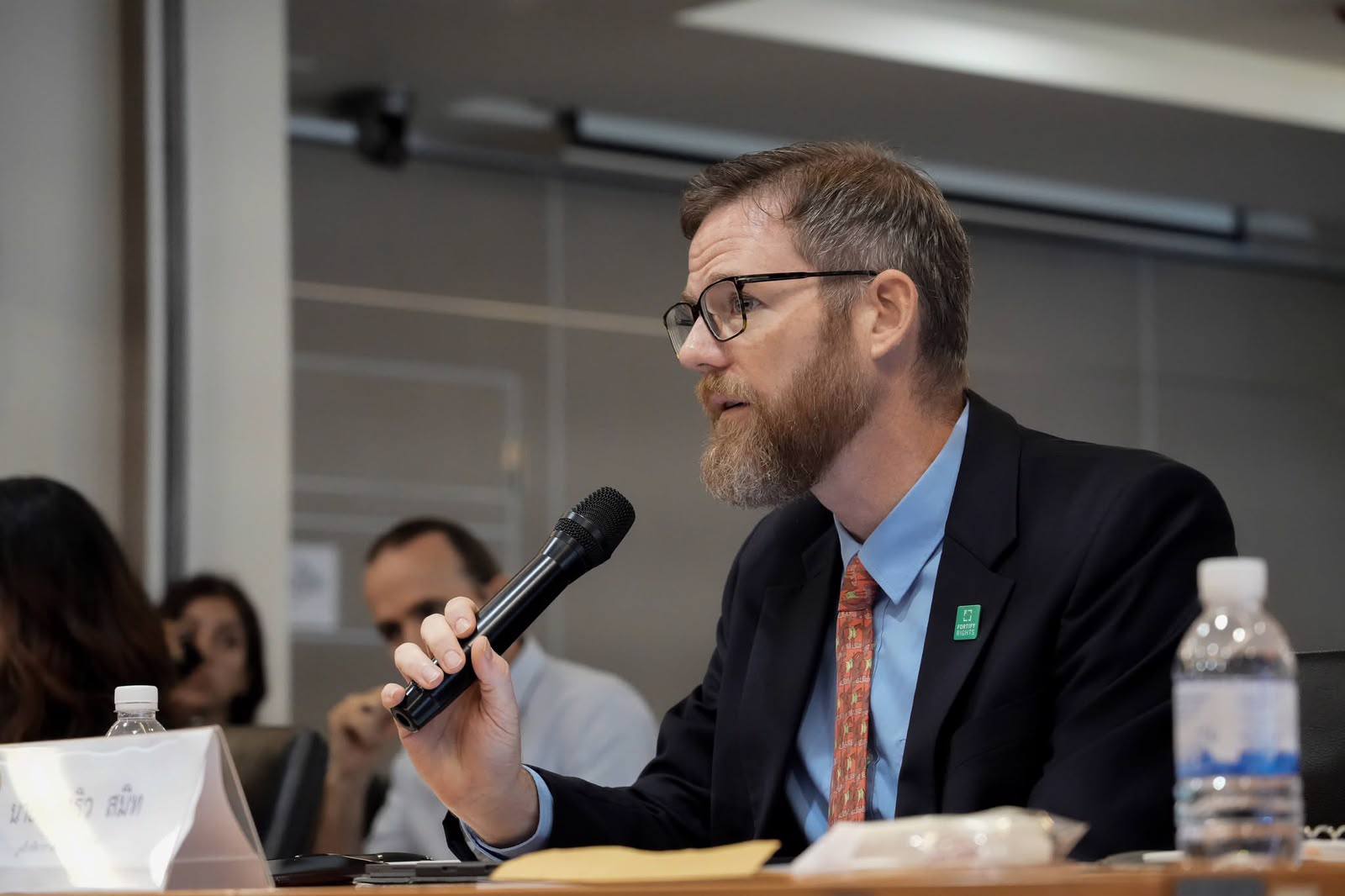
On 23 June, Fortify Rights founder and CEO Matthew Smith spoke before the UK Parliament in a session on atrocity prevention and the Integrated Security Fund. Following the testimony, Fortify Rights published a statement urging the United Kingdom to lead a coalition of States to refer the full situation in Myanmar to the International Criminal Court under Article 14 of the Rome Statute. It further demanded States to impose a new round of targeted sanctions against the Myanmar military and its sources of revenue and aviation fuel, restore and increase life-saving aid to refugees and displaced people from Myanmar, and increase support for human rights defenders documenting atrocity crimes.”
LAW: DUTCH DELEGATION VISITS ROHINGYA ADVOCATES IN COX’S BAZAR
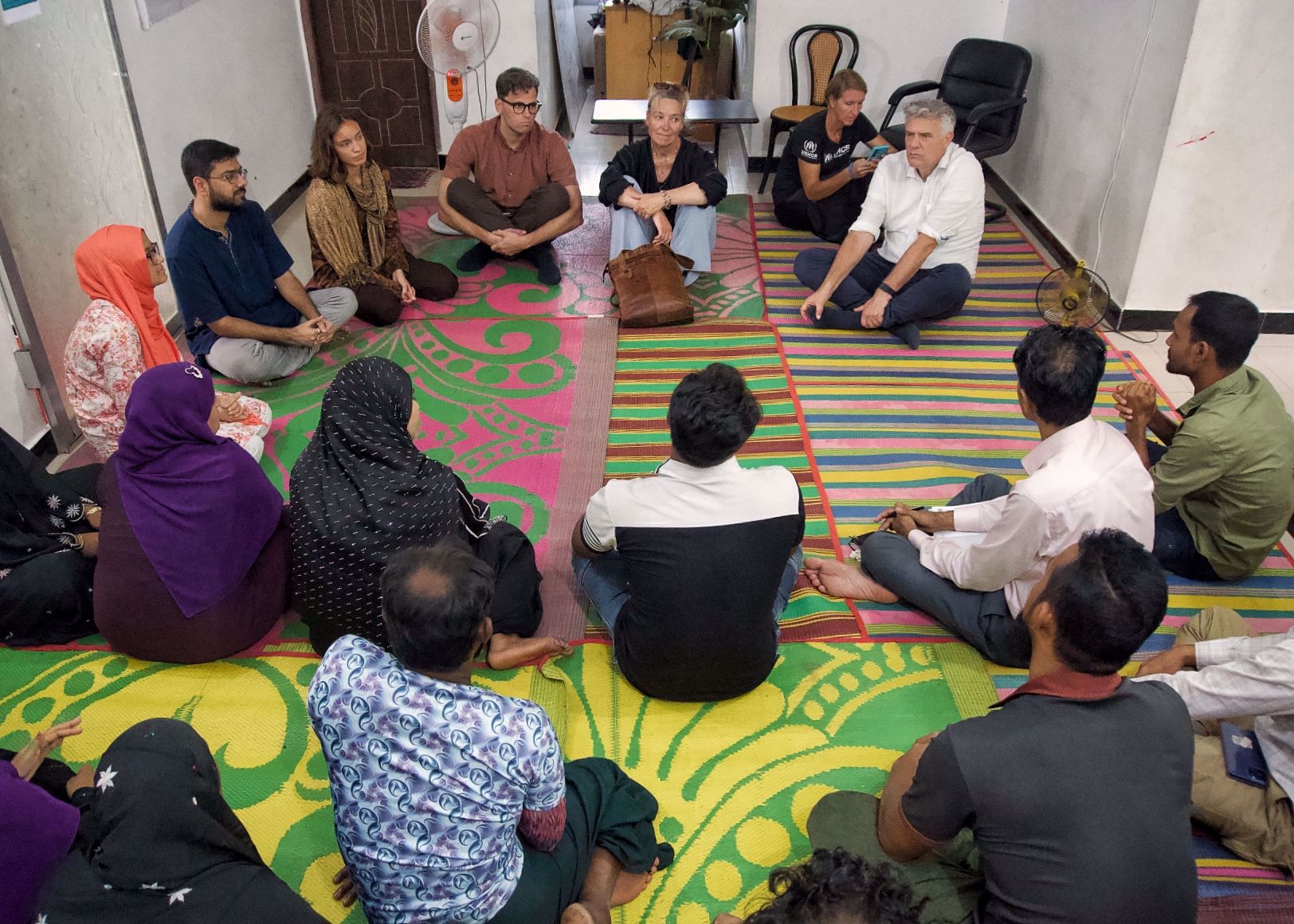
In June, Legal Action Worldwide welcomed Dominique Kuhling (Director for Asia & Oceania, Dutch Ministry of Foreign Affairs) and Joris van Bommel (Ambassador of the Kingdom of the Netherlands to Bangladesh) to its field centre near Cox’s Bazar. The delegation met with Rohingya Survivor Advocates to discuss ongoing international justice efforts, the root causes of the ongoing conflict in Rakhine State, and survivor-led advocacy to end impunity in Myanmar. Among the Survivor Advocates were members of the Rohingya victims’ delegation, who attended the hearings in The Gambia v. Myanmar genocide case at the ICJ in The Hague.
FORTIFY: ‘JUNTA MASSACRE IN BAGO HIGHLIGHTS NEED FOR INTERNATIONAL ACCOUNTABILITY’
On 9 June, Fortify Rights published its new investigation documenting the Myanmar military junta’s airstrike and ground attack on a Buddhist monastery in Bago Region on 5 March, which killed 28 civilians, including women and children. According to Fortify, “the junta failed to distinguish between civilians and combatants and did not take all feasible precautions to protect civilians” and called upon U.N. member states to urgently increase support for international accountability for ongoing and unmitigated mass atrocity crimes in Myanmar and reject coup-leader Min Aung Hlaing’s attempts to legitimize military rule.
|
|
|---|
|
UN SECRETARY GENERAL’S LATEST REPORT ON SYSTEMIC CONFLICT-RELATED SEXUAL VIOLENCE IN MYANMAR
On 19 June, to mark International Day for the Elimination of Sexual Violence in Conflict, the United Nations Secretary General published its latest report on Conflict-Related Sexual Violence. On Myanmar, the report highlights the persistent, widespread, and systematic use of sexual violence as a tactic of war and political repression by the Myanmar military (pp 16 – 17).
STATES SUBMIT PROPOSED AMENDMENTS ON THE CRIMES AGAINST HUMANITY TREATY
The State proposals for the Crimes Against Humanity Convention have now been published on the UN website. More than 60 states and the European Union submitted proposals ahead of the April 30 deadline, spanning every region of the world. Afghanistan, South Korea, Japan, Singapore, China, Timor-Leste, and Nepal submitted proposals from Asia. The formal treaty negotiations will begin in 2028, but the compiled text being prepared now will serve as the basis for those negotiations along with other documents.
OHCHR: DECLINE IN INTERNATIONAL SUPPORT IS COMPOUNDING SUFFERING OF CIVILIANS IN MYANMAR
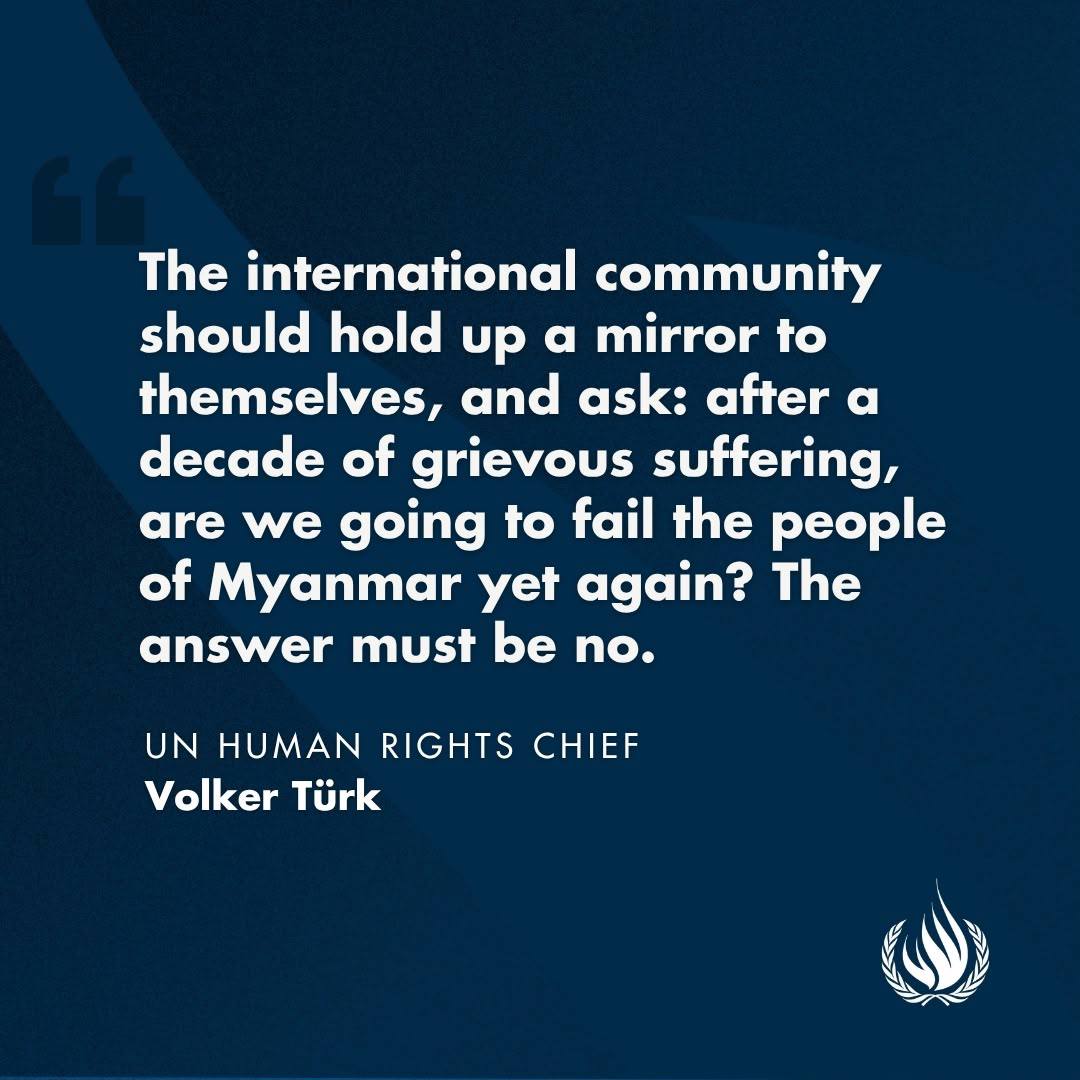
On 22 June, the UN High Commissioner for Human Rights published a report on the situation of human rights in Myanmar. The report covers the period from August 2025 to the end of January 2026 – from the military’s announcement of elections through to the conclusion of the voting period – detailing serious human rights violations amid ongoing conflict-related violence, lack of respect for the rule of law, denial of humanitarian assistance, and the impact of the military-controlled elections.
|
|
|
UN: ‘RECORD NUMBER OF CHILDREN IN CONFLICT VICTIMS OF GRAVE VIOLATIONS IN 2025’
On 16 June, the United Nations Secretary General released a new report on Children and Armed Conflict. The report found that a record number of children endured grave violations by parties to armed conflict in 2025, the highest number of children affected since the beginning of the CAAC mandate. According to verified UN data, 38,558 grave violations were committed against children in 2025, marking a fourth straight year of shocking figures. On Myanmar, the United Nations verified 2,203 grave violations against 1,746 children (1,097 boys, 638 girls, 11 sex unknown. The United Nations documented some 1,072 grave violations, which are pending verification." (pp. 19 - 21)
DVB: ‘MYANMAR’S UN AMBASSADOR BLASTS SECURITY COUNCIL FOR “FAILURES” AMID ESCALATING MILITARY ATTACKS’
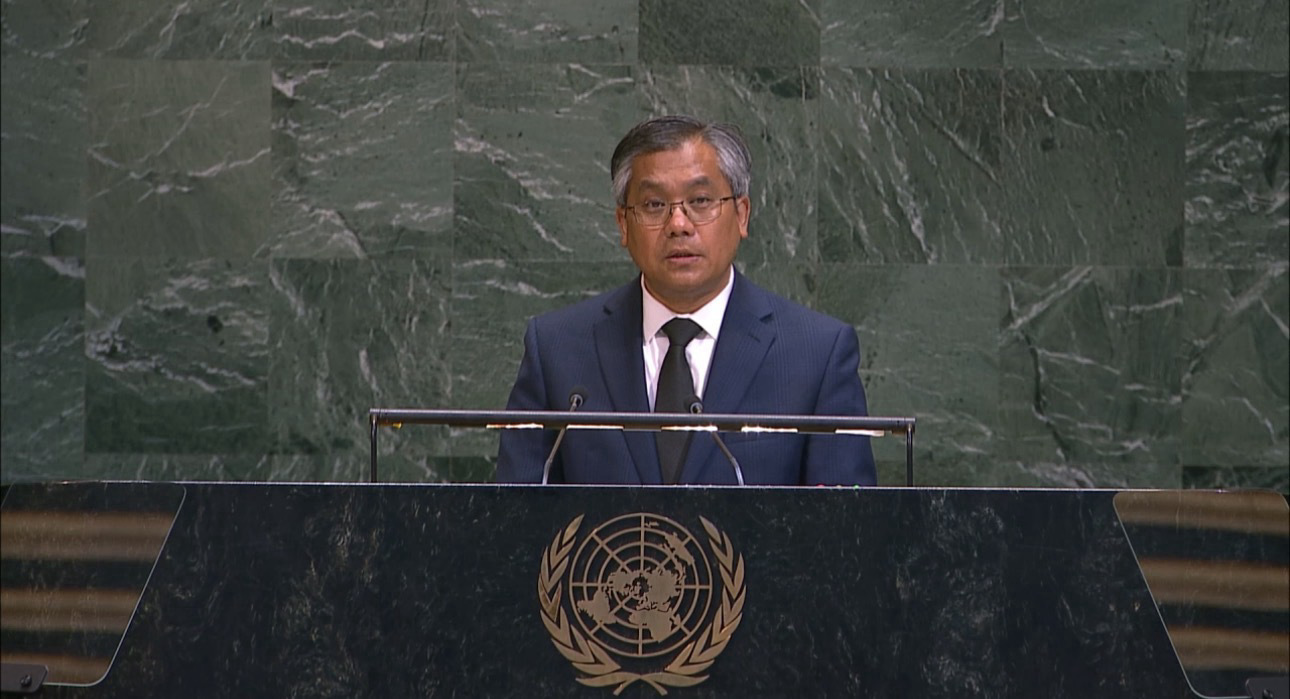
On 5 June, Myanmar’s Permanent Representative to the United Nations, Ambassador Kyaw Moe Tun, delivered a scathing critique of the U.N. Security Council, accusing the body of failing its mandate to protect Myanmar’s civilians from an intensifying campaign of military violence. Speaking at the U.N. General Assembly in New York, Kyaw Moe Tun addressed the Security Council’s 2025 annual report, describing it as a stark reflection of international paralysis in the face of the post-coup crisis.
REUTERS: ‘THAI JOBS FOR MYANMAR REFUGEES COULD SHOW WAY FORWARD FOR ASIAN NATIONS, UN SAYS’
On 9 June, Reuters reported that “[m]ore than 5,500 Myanmar refugees living in camps along Thailand's border have found jobs since Bangkok eased employment curbs last year, an approach that offers a regional example. As a result, Thailand allow about 80,000 refugees from Myanmar to work legally, in a policy change significant for a population that has lived for decades dependent on humanitarian aid in nine shelters along the shared border. Raouf Mazou, UNHCR assistant high commissioner for operations, said Thailand's efforts could become a model for other countries in Southeast Asia grappling with the problem of protracted displacement”.
|
|
|---|
|
|
|
|
|  |
|
|
|
|